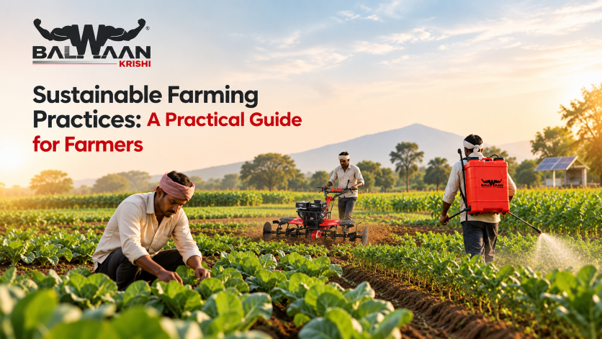
Sustainable farming practices are methods that keep land productive season after season: crop rotation, reduced tillage, organic fertilisation, integrated pest management, efficient irrigation and agroforestry. Indian farmers are turning to them as soil health declines, water gets scarcer and input costs climb. These eco friendly farming techniques suit small plots as well as large holdings. This guide covers the main types, what each one returns, and how to start without cutting your yield.
What Are Sustainable Farming Practices?
Sustainable Farming Practices methods balance what you take from the land this season against what the land can give in ten years. Conventional intensive farming treats soil as a medium to hold roots and delivers everything else from a bag or a can. Sustainable methods treat soil as a living system that produces part of the fertility itself.
That is the difference, You are not choosing between productivity and conservation. You are choosing between paying for fertility every season and building fertility that stays.
Most farmers run these methods alongside conventional inputs for several seasons, cutting the bought inputs as the soil carries more of the load.
Types of Sustainable Farming Practices
The main types fall into three groups: practices that build soil, practices that save water, and practices that manage crops and pests differently.
Crop Rotation and Intercropping
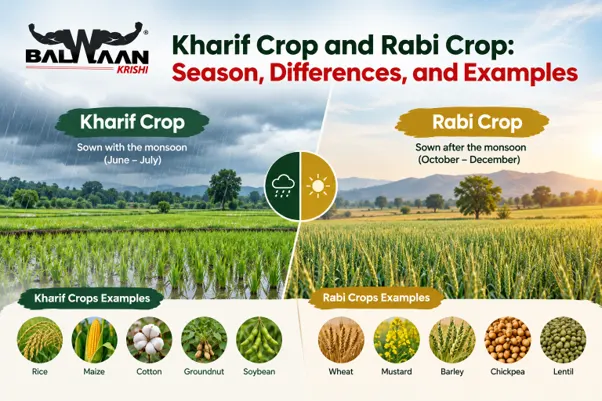
Rotation means changing what you grow on a plot between seasons instead of repeating one crop. Legumes fix nitrogen back into soil that cereals draw down, so a pulse in the rotation cuts what you buy next season. Intercropping does the same work within one season, by growing compatible crops together. Both break pest cycles, because pests that specialise in one crop lose their host when it moves.
Reduced and Zero Tillage
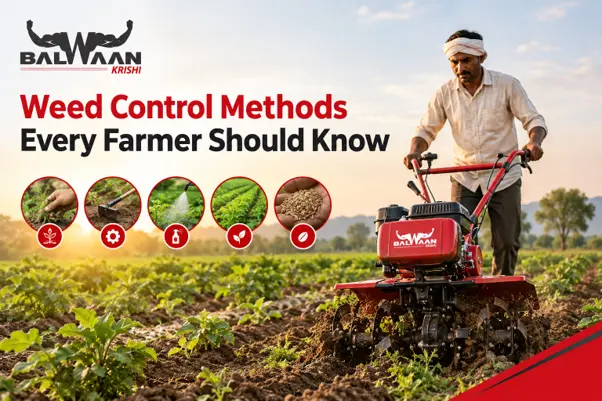
Every plough pass breaks soil structure, exposes organic matter to air and disturbs the fungal networks that move nutrients between roots. Reduced tillage limits that disturbance; zero tillage sows directly into the previous crop's residue. Soil holds moisture better and erodes less. Note that reduced tillage needs different implements from deep ploughing, and surface residue changes how a seeder behaves.
Organic and Natural Fertilization
Compost, farm yard manure and biofertilizers feed the soil rather than the plant directly. They release nutrients slowly, which suits a crop's uptake better than one heavy dose, and they add the organic matter that gives soil its structure and water-holding capacity. The return is slower than synthetic fertiliser in the first season. It compounds, which synthetic fertiliser does not.
Did you know? Research drawing on ICAR soil survey data puts average soil organic carbon in Indian soils at around 0.54%, with most soils also low in major and micronutrients. That is the deficit organic fertilisation is working against, and it is why the gains take more than one season to show.
Integrated Pest Management (IPM)
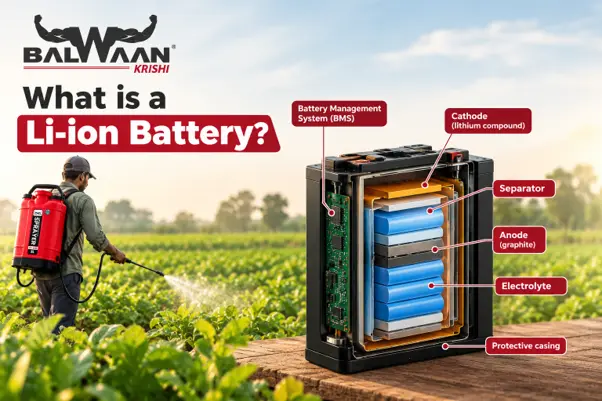
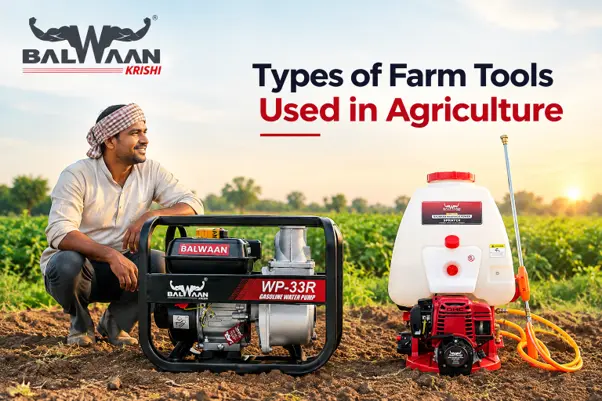
IPM replaces calendar spraying with monitoring. You scout the crop and act only when a pest crosses the threshold where it costs more than the treatment does. Natural predators, trap crops and resistant varieties do part of the work. When you do spray, you target a specific problem at a specific point in its life cycle, which needs less chemical and works better. That depends on equipment covering the crop evenly, which is where a well-maintained knapsack power sprayer earns its place.
Important: IPM reduces pesticide use, it does not eliminate it. Never stop a chemical control programme abruptly on a standing crop. Follow the product label and your local KVK or state agriculture department for thresholds, dosage and re-entry timing.
Water-Efficient Irrigation Techniques
Flood irrigation waters the whole field whether roots are there or not. Drip delivers to the root zone; sprinkler and rain gun systems spread water as droplets instead of sheets. Central Water Commission data puts agriculture at roughly 80% of India's freshwater use, so irrigation is where eco friendly farming techniques make their largest single difference. For tall or widely spaced crops like sugarcane, maize or fodder, rain gun sprinkler systems cover ground drip lines c annot reach economically.
Agroforestry and Farm Biodiversity
Trees and hedgerows are not lost cultivation area. Roots hold soil on slopes and bunds, canopy cuts evaporation, and leaf litter feeds organic matter back in. Mixed planting supports the predator insects IPM depends on. The trade-off is worth naming: trees compete with crops for light and water at the edges, so placement on boundaries and windward sides matters more than the number planted.
Benefits of Sustainable Farming
The benefits of sustainable farming show up in three places: your soil, your input bill, and how your field handles a bad year.
Improved Soil Health and Fertility
Organic matter is what makes soil hold water, resist erosion and release nutrients slowly. Every practice above adds organic matter or stops removing it. As it builds, you buy less fertiliser to reach the same yield, because more of the fertility is already in the ground. This is the benefit that takes longest to appear and lasts longest once it does.
Lower Water and Input Costs Over Time
Efficient irrigation cuts pumping hours and the diesel or electricity with them. Natural fertilisation reduces what you buy each season. IPM reduces spraying. Against that, drip lines and equipment cost money upfront, and compost takes labour to make and spread. These practices lower recurring costs and raise one-time costs, so the arithmetic depends on how long you plan to farm that land.
Better Resilience to Weather Extremes
Soil with more organic matter absorbs heavy rain instead of shedding it, and holds moisture longer through a dry spell. A field with two or three crops does not lose everything when one fails. Neither saves a harvest in a severe drought. Both are the difference between a poor season and a total loss.
How to Start Adopting Sustainable Farming Practices
Do not change everything at once. Pick one or two practices that suit your land, run them for a season, and expand from what works.
Assessing Your Farm's Soil and Water Conditions
Start with a soil test through your KVK or the Soil Health Card scheme. It tells you your organic carbon level and which nutrients are short, so you correct a measured deficiency rather than a guess. Then work out your water position: your source, how reliable it has been over five years, and how much you lose to runoff and evaporation.
Choosing Practices That Fit Your Crop and Land Size
Small plots get the fastest return from compost, intercropping and rotation, because they need labour and planning rather than capital. Larger holdings usually gain more from irrigation efficiency first, since the water and pumping savings scale with area. If your land slopes, soil conservation comes before everything else, because you cannot build fertility on ground that washes away each monsoon.
Equipment That Supports Sustainable Farming
Most sustainable practices are limited by what you can physically do across your acreage. Compost helps if you can spread it. IPM works if you can spray accurately when the threshold is crossed. Efficient irrigation depends on moving water where it is needed, at usable pressure.
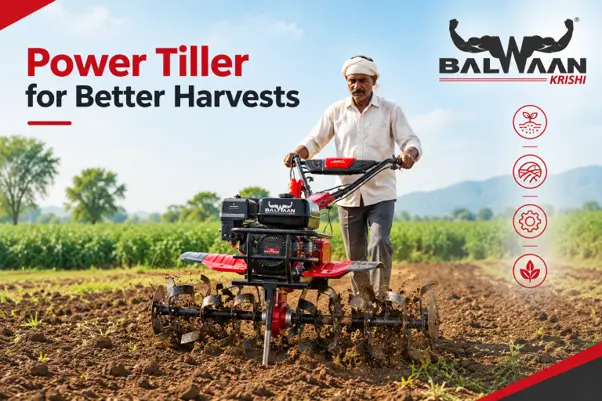
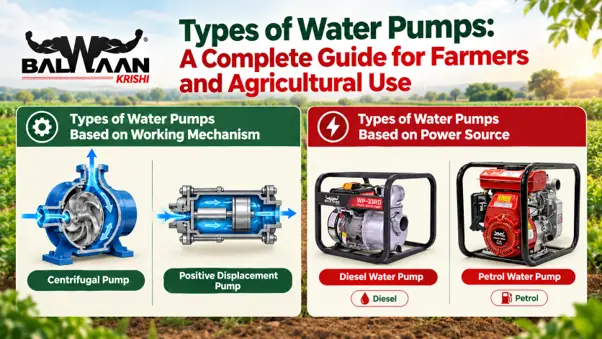
Reduced tillage needs implements that work surface soil without inverting it, rather than a deep plough. Targeted spraying needs a sprayer that holds even pressure through a tank, since falling pressure changes droplet size and coverage. Drip and sprinkler systems need petrol water pumps or an electric set delivering the flow and head the system was designed for.
Equipment does not make farming sustainable on its own. It removes the reason most farmers abandon these practices in the second season: doing them by hand across a whole holding takes more time than the season allows.
FAQs
1. What is the difference between sustainable farming and organic farming?
Organic farming prohibits synthetic inputs entirely and is a certified standard. Sustainable farming is broader and uncertified: it reduces inputs and protects soil and water, but may still use synthetic fertiliser or pesticide where nothing else works.
2. Can sustainable farming practices maintain the same yield as conventional farming?
Yields often dip slightly in the first season or two while soil biology recovers, then stabilise. Over longer periods they tend to be steadier, especially in poor weather years, because healthier soil buffers stress better.
3. What are some low-cost sustainable farming practices for small farmers?
Crop rotation, intercropping, farm yard manure and composting cost labour rather than capital. Mulching with crop residue is close to free. Start with these before spending on irrigation equipment.
4. How does crop rotation improve soil fertility?
Different crops draw different nutrients at different depths, so rotation avoids exhausting one layer. Legumes in the rotation fix atmospheric nitrogen into the soil, leaving more available for the cereal that follows.
5. Can sustainable farming practices help during drought years?
Yes, partly. Soil with higher organic matter holds moisture longer, and efficient irrigation stretches a limited water supply further. Neither replaces water that is not there, but both extend how long a crop survives without it.